
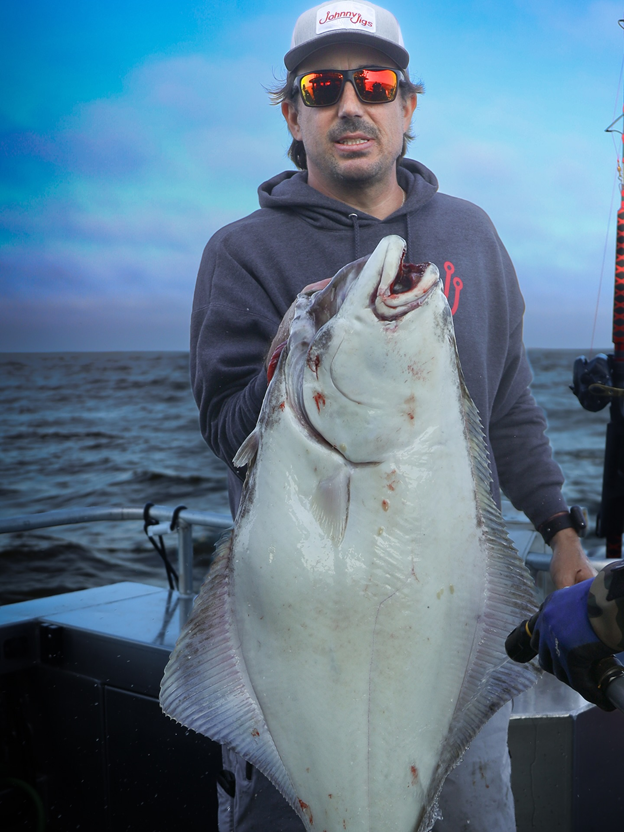
In addition to your outfit, a tackle bag stuffed with jigs, some spare line for respooling or tying new leaders, and your basic pliers and bait knife, there are some fishing tools you should make sure to keep on hand before every outing.
Once you experience being on the water with these tools, you’ll wonder how you ever got by as an angler without.
Fish Grippers
Fish grippers, most of which are designed to securely hold a fish by the lip, are incredibly versatile and valuable fishing tools, especially for those that practice catch and release.
There are many common practices that are absolutely disastrous for the fish. Among these are gilling, gaffing, and handling fish with a towel.
Let’s start with least to most offensive. The practice of holding a fish with a towel wipes off the fish’s slime coat, which predisposes it to infection.
Gilling a fish is also terrible as fish handled by the gills will often die when released, even if they swim away.
Lastly, it should be obvious why gaffing is not a preferred practice. The only time you should gaff a fish is if you are definitely going to keep it.
Fish grippers, by contrast, preserve the fish’s slime coat, protect the gills, and don’t create puncture wounds that incur blood loss and a higher risk of infection.
Moreover, fish grippers keep your hands further away from the fish’s mouth and thrashing body, keeping your fingers away from teeth as well as any swinging assist hooks.
Will you need fish grippers for every landing? Certainly not. But they are valuable fishing tools to keep on deck nonetheless.

Knot Cincher
A knot cincher, also known as a knot puller, is a remarkably basic fishing tool but one that will validate itself at every turn.
At its most basic, a knot puller is a non-slip cylinder around which you wind a section of fishing line in order to pull on, and tighten, a knot.
The reason this is so valuable is because knots that are not properly cinched more often fail or slip.
But, just as importantly, attempting to cinch on a knot with your bare hands, especially if they are waterlogged, is a recipe for a nasty laceration, especially if you are using thin diameter braid.
Save your skin - use this fishing tool.
Line Nippers or Line Scissors

Your knife will suffice, but for those frequent moments when you need to trim a stray tag end or just remove a frayed bit of line, you don’t always want to unsheath your knife.
Rather, a pair of line nippers or line scissors kept on a small, spring-loaded, retractable magnet can be just as utilitarian, if not more so.
Line nippers perform best with monofilament and fluorocarbon, and generally don’t work that well with braid, whereas scissors perform well with all types of fishing line. Therefore, let what you use dictate what you carry.
Disgorgers
Pliers are better than nothing, and you should always have a few pairs of pliers on board, but disgorgers can reach deeper and often afford a better grip than a pair of pliers would. Therefore, add a disgorger or a purpose-engineering hook removal fishing tool to your arsenal. The faster and less invasively you can remove the hook, the better chance any fish you release stands to survive.
Split Ring Pliers
Need to replace your jig’s hooks? Then you’d better hope you brought along not just some spare split rings, but split ring pliers. Regular pliers will just send off split rings into the wild blue abyss.
Split ring pliers have specially designed jaws that split and hold a split ring so that you can thread on a new hook, or thread a new one onto a jig. With a pair of these, you can replace worn or fatigued hooks in a matter of seconds, with less headache.
A Hook Hone
You can get the job done with a regular sharpening stone, but hook hones usually have a guide set into them that’s ideal for restoring a hook point in a matter of a few passes.
Rod Protectors
Rod protectors are special sleeves that you can use to prevent your rods from rattling against each other - essential for protecting not just your rods but your reels against damage while on the water.
A Tape Measure and Scale
It should go without saying, but if you catch to keep, you will need a tape measure to ensure your harvest falls within legal limits.
As for a scale, it can mean the quantifiable difference between a fish tale and an actual, measurable record; even if you never take a fish to weigh-in at an official tackle shop, knowing what the weight was because you had a scale carries a lot more weight (pun intended) for bragging rights.
Explore These and Other Fishing Tools Here
Before your next trip on the water, make sure you’re prepared with these and other fishing tools, which we carry here - and make sure you subscribe to our official YouTube channel, JohnnyJigsTV, so you never miss out on news, releases or other developments.