
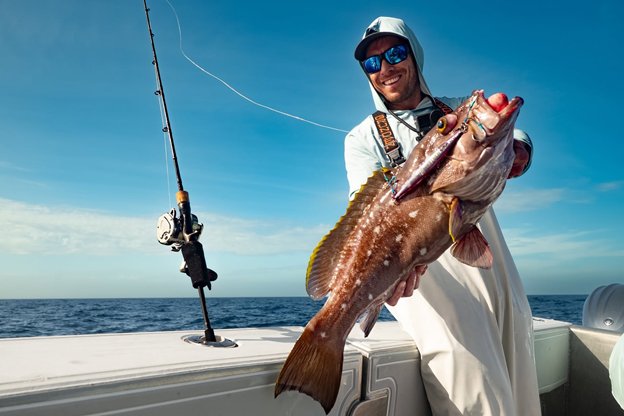
We’ve all missed fish now and then. That’s why it’s called fishing and not catching. Either way, it’s not a pleasant experience, so we know you’ll sympathize when we say any angler would take any tips he or she could get to minimize the number of fish lost.
So, that’s what we’re going to do. Put some of these into practice next time you’re saltwater jig fishing and see if they change the game for you.
Don’t Set Too Fast
Some fish will inhale your jig entirely and run with it immediately. It’s hard to miss these, especially when they don’t let go of the jig even after they know it’s metal (which is sometimes the case with more aggressive species that strike more out of reaction than they do out of conviction that the jig is food).
Others are short-strikers and nibblers. If you’re fishing for a shy species or one that’s notoriously hard to hook, take your time. The last thing you want to do is swing for the fences on a fish that doesn’t even have the point of the hook in its mouth. And if you do, you will likely scare it off without getting a second chance, too, not just miss the hookset.
Take your time with the cautious species. Those very light taps are often preliminary to a more convincing tug. Don’t set right away and you may be rewarded with fewer misses.
Don’t Rely Solely on the Hooks That Came with the Jig
Let’s add some clarity here. The hooks that came with your jig might be excellent, but often short strikers will need a little more enticing, and that comes in the form of assist hooks.
Assist hooks are secondary and tertiary hooks you add to the jig via a short length of cord, which are there to connect on short strikes, or if the fish takes the jig from a weird angle. That length of cord lets the hooks swing freely of the jig, so that you get a better chance to hook into them on those off-strikes.
Also, another tip here: keep your hooks sharp (including the assist hooks). A few passes on the hone before you drop down can make the difference between a boated fish and a story.
Stop Being Afraid to Get Closer to Structure
One of the biggest mistakes you might be making while saltwater jig fishing is that you aren’t getting your jig in the strike zone. And for species that hug structure, such as flatfish and wreck-dwelling species, oftentimes you need to get that thing right in front of their faces.
Yes, it’s risky, and yes, you are going to lose a jig on structure from time to time. That is going to happen, but the truth is you aren’t really fishing if you don’t occasionally lose terminal tackle.
There are times you will need to get that jig right up next to structure to coax a strike. Ambush predators can be extremely wary and while they sometimes will aggressively chase a jig, there will be other times when they won’t move more than a few inches to take it.
This is a game of small degrees. It’s not good enough to be a few feet from the face of a fish that won’t move more than six inches to inhale your jig. So suck it up and get closer. It can make all the difference in the world.
Set Your Drag Tighter

Lastly, there are fish that hug structure and whose first move on feeling the hook is going to be a drag burner back to the hole they came out of.
You need to put the brakes on these fish immediately. Some fish, like grouper, will come out from cover, take a jig, and then smoke right back towards whatever structure they emerged from.
If you don’t stop that first run back to cover, you will lose the fish. They will get into a hole or wrap your line around something, and that will be the end of that. You’ll lose both the jig and the fish.
Keep your drag tight; not so tight that you break the line immediately, but tight enough that you can winch the fish away from whatever cover is near it. Then you can let off and let the fish tire itself out.
But the first order of business is keeping the fish away from anything they can use to tangle you and break you off.
Follow Us for More Jig Fishing Tips and Tricks
Hopefully you found these 4 jig fishing tips helpful. Try some of them the next time you’re on the water, and make sure you bookmark our blog and follow our YouTube channel for more helpful insights like these.