
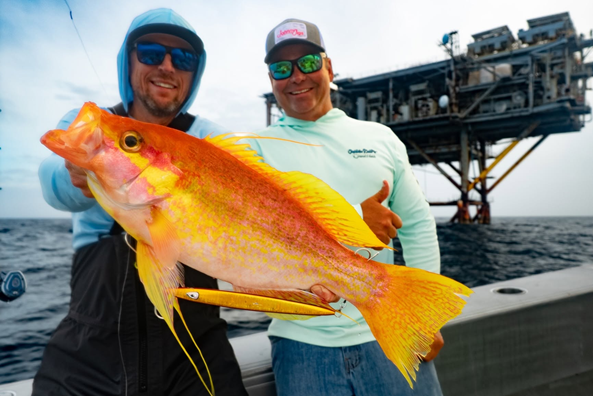
Let’s just look at an unpleasant fact. There are a lot of fishermen out there that either don’t know how to handle fish safely, or else don’t care.
This short post should break down some of the basics so that you’ll be safer, the fish will be less stressed, and you’ll be less likely to have killed a fish after you release it.
Handling Fish That Don’t Have Sharp Teeth
Fish like grouper, snook, striped bass, and weakfish that either lack discernible teeth or have small teeth that pose little threat to human skin can be handled using a technique known as lipping.
To lip a fish, insert your thumb in the fish’s mouth and pinch under the chin between where the gills come together.
Small fish can be lifted from the water vertically in this fashion. However, no fish should be lipped and then turned in a horizontal fashion. This puts an immense amount of strain on the fish’s jaw and can cause permanent damage. In fact, it is stressful enough to kill fish in some situations.
Large fish can also be lipped, but if you are going to raise them from the water, they should not be held by the jaws alone. While this is not necessarily as destructive as torquing the fish’s jaws, it still puts a lot of stress on the fish and can cause permanent injuries and in severe cases, post-release mortality.
If you are going to lip a larger fish and raise it free of the water, place your other hand under the fish’s belly or grab it by the tail to support its full weight. This helps prevent strain on the fish’s internal organs that can cause injury or death.
Fish That Have Teeth
While some fish can be lipped, many species, like bluefish, mackerel and sharks, have sharp teeth and strong jaws that make it highly advisable not to put your hands anywhere near their mouths.
Species like this should be handled differently. As a general rule, to raise a fish from the water if it has teeth, grasp it firmly by the base of the tail and place your other hand under the fish’s belly, if possible directly between the pectoral fins.
This will support the fish and should keep your hands, arms, and body away from the fish’s jaws.
On some fish, it might make more sense to pinch the gill plates together with one hand while grasping the base of the tail with the other, but this should be approached on a case by case basis. Some fish have sharp margins to their gill plates that can cause dangerous lacerations, and even were that not the case, you must be very careful when placing your hands anywhere near a fish’s gills.
If You Have a Fish Gripper

A fish gripper is an indispensable fishing tool that can help you handle fish more safely and more responsibly with less risk to both you and the fish. In effect, using a fish gripper is like lipping the fish but with a tool instead of your hands.
However, a fish gripper can also be used with toothy species. When using one, grasp the fish firmly and lift it vertically from the water. Small fish can be lifted this way, but large fish should be supported with your free hand in one of the manners described above.
In addition to the fact that the fish gripper offers a better grip on a slippery fish than your fingers likely would, there are other advantages to the use of one.
For one thing, a fish gripper will not only keep your fingers away from the fish’s teeth, but away from any swinging assist hooks that are on the jig the fish has taken.
For another, the fish gripper creates a barrier between you and the fish, making it less likely that you will wipe off some of the fish’s slime coat.
So, all in all, a fish gripper can be a highly useful tool to have on board. You might not use it with every catch, but it is better to have one and not need it than need it and not have it.
Other Notes
In addition to what we’ve covered so far, here are some other notes for safely handling fish:
- No matter how you prefer to handle fish, never wear gloves or use a towel when handling them. These things will compromise the fish’s slime coat, which is one of the most important immune barriers between the fish and its environment. A fish with a compromised slime coat is not just more likely to become ill, it is at a much more elevated risk of dying once it is released.
- Never, ever place your hands under a fish’s gill plates. This is called “gilling” and it is commonly practiced on fish that have teeth because it keeps the fisherman’s hands away from the mouth of the fish. While gilling does provide a good grip on the fish, it produces a remarkably high risk of killing the fish. Don’t do it.
- Fish are often gaffed to bring them on board, but you should never gaff any fish unless you are 100% certain you are going to harvest it. While a fish will not necessarily die from being gaffed, it is incredibly stressful and likely to kill the fish.
All in all, just be mindful of the fact that you are handling a living creature when you swing a fish over the rail, especially if you are going to release it. A little bit of conscience and gentle handling will go a long way towards minimizing the risk of a fish dying after it is released.
Shop Fish Grippers and Fishing Tools Here
Hopefully you found a tip or two helpful in this article, but if you’re here for fishing tools like braid scissors or fish grippers, we have you covered there. Take a closer look through our collection, get what you need, bookmark our page for future use, and if you have any questions about anything we sell, get in touch with us directly and we will be more than happy to help you out.