
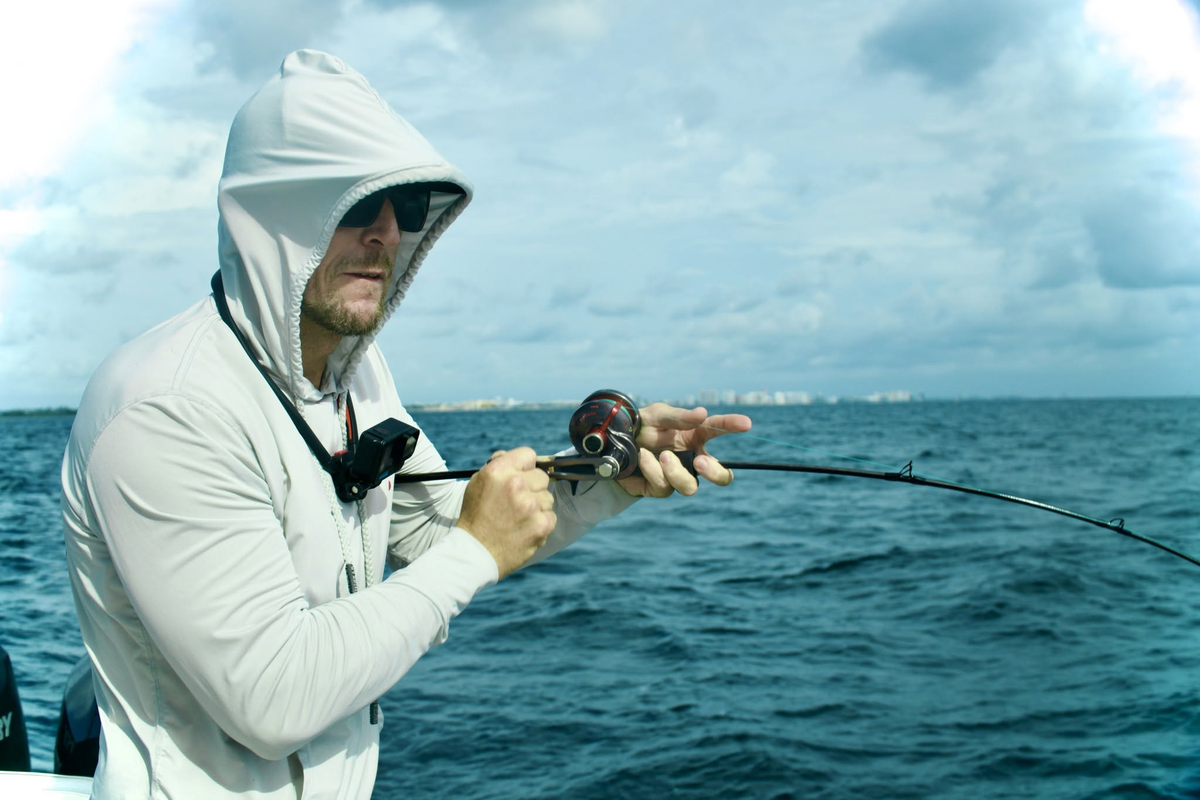
Regardless of your brand of preference, slow pitch jigging rods aren’t cheap. They are highly specialized to execute the finesse cadences we often impart to slow pitch jigs, and on top of that are engineered for a high-degree of sensitivity, all while maintaining the power necessary to bring a fish to the gunwale.
Yet they can also be very fragile, and handling a slow pitch jigging rod poorly is a quick way to snap the tip, or worse. Here are 6 techniques, learned from experience, that can help you stop breaking rods.
No need to thank us, just make sure you observe the following. It should be easy enough.
Stop High-Sticking
You may have heard from other fishermen to “keep your rod tip up” but this is only half-good advice.
The truth of the matter is that you want to keep your line tight. Slack in the line gives the fish play that it can then use to throw the lure. But keeping the line tight does not mean you need to keep the tip up.
In fact, there are many instances in which you don’t want to keep the tip up. Fish also jump to throw lures, and pulling the rod tip high actually encourages this behavior. On top of that, keeping the tip up also loads the rod in such a way that if you are not careful and the fish throws the lure, it’ll get launched directly at your face.
But this is neither here nor there. High-sticking the rod, which is the practice of keeping the rod tip very high under a lot of pressure to the effect that at a certain point you’re actually lifting the fish partially out of the water, is a sure-fire way to break it.
Many rods are broken every year because of high-sticking. You don’t need to do it.
Stop Horsing Fish in, Generally
We get it; it’s fun to crank down on the drag and really put the muscle on big fish. Sometimes it’s also necessary, especially to break that first run of a wreck dweller like a grouper whose first instant is going to peel your line back to cover where it can wrap you up, hunker down, and break you off.
But once you have the hook set on a fish and you know more or less you’re in the clear of getting snagged on structure, there is just no reason to horse fish in. Let the fish tire itself out and let the drag carry its share of the bargain.
You’ll be less tired, you’ll enjoy the play of the sport more, and you’ll break fewer slow pitch jigging rods.
Don’t Place the Rod on the Boat Deck (or on the Ground, Ever)
Besides high-sticking, this is probably the worst thing you can do with a slow pitch jigging rod, or with any rod, for that matter.
Never, for any reason, for even a second, place your rod down on the boat deck, or on the ground at all. That’s likely the main way rod tips get broken.
One careless second of oversight, and someone is going to step on your rod tip and snap it clean off; or worse, break it farther down. Rod tips can be replaced but it’s a lot harder to deal with a break in the belly of the rod.
Also, even if you don’t actually break the rod blank, placing the rod down and someone stepping on it is a common way eyelets and guides get broken too, and no one wants to deal with that either.
Protect the Rod in Transit
Whether you’re in the car or in the boat, your expensive slow pitch jigging rods (and reels, for that matter) should be afforded the highest level of protection you can reasonably extend them.
Rod sleeves and rod tubes are both good options, but the best choice is a hard-sided case that will provide protection for both the rod and reel. If you don’t have that, make sure you use at least a rod sleeve and cover the reel with something like a neoprene reel cover.
Otherwise, take advantage of other features, such as areas in the boat that have slots for rod storage while you’re out there, or at least keep the rods in rod holders to keep them off the deck and protected from getting stepped on.
Don’t Jerk a Snagged Jig
Everyone’s snagged a lure at one point or other, and there’s no shame in it. If you’re not getting close enough to structure to get periodically snagged it can hardly be said you’re fishing anyway. But, there is shame in using the rod to jerk the jig free, or in grabbing the rod near the tip and yanking on it. Both of these are top-tier ways to break a rod tip or snap it in half, way further down, near the rod grips.
Use a pair of flat pliers, wrapped around the line, to pull the jig free, or wear a pair of heavy gloves, wrap the line (once, never more or you risk a severe laceration) around your hand and try to pull it free). And, of course, you could also use a special weighted lure retrieval tool that might also help.
Don’t Grab the Rod Too High
When you’re getting a fish close to the boat, don’t grab the rod too high to try to lever the fish in. Doing this, like high sticking, also creates a condition that places an enormous amount of stress on the rod blank and which can result in a broken rod tip, or just a rod that’s broken outright.
Time for a New Slow Pitch Jigging Rod?

Now you know 6 things you should never do if you want to avoid a broken rod. But if it’s too late for that and you’re here because you need to replace a slow pitch jigging rod, at least it can be said that you’re in the right place.
Check out our collection; we represent the best brands in the business in both rods and reels, and carry slow pitch jigs and tons of other terminal tackle as well. Get what you need and bookmark our page so you know where to turn whenever you need to stock up on anything else before you venture out again.