
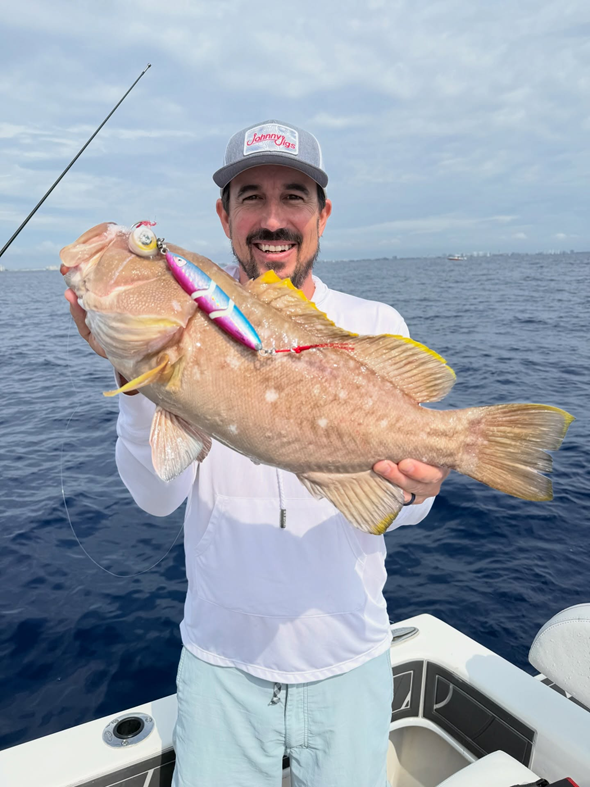
Saltwater jig fishing can be an incredibly effective way to target an equally incredible variety of species, from inshore flatfish to wreck-dwelling species in deep water far offshore, and in some cases, even pelagics.
That being said, it helps if you have a little know-how to be more effective on the water.
Given the fact that there is more than one type of saltwater jig and therefore more than one discipline of saltwater jig fishing, we rounded up a few tips for your perusal here. See if any of these is actionable for you.
With a Bucktail
Bucktail jigs can be amazingly effective inshore presentations, especially when fishing for fluke, black sea bass, striped bass, and bluefish. Here are 3 tips to be more effective when saltwater jig fishing with a bucktail.
- Tip it. A naked bucktail will catch fish, but it will be nowhere near as effective as it could be if you tip it. Most anglers use soft plastics like Gulp Swimming Mullet (or other patterns) but you can also tip a bucktail with real cut bait, such as a strip of squid or a live baitfish.
- Make sure you get to the bottom. More often than not, bucktail jigs are hopped or yo-yo’d along the bottom. If you are targeting fish that hold deep and you don’t let your jig get there, you will be out of the strike zone. Here’s another tip. If you are having a hard time getting deep enough, consider increasing the weight of your jig head.
- Try working it in the middle of the water column. While you should generally work your bucktail along the bottom, there are times when it will prove more effective when worked higher in the water column.
With a Swim Jig
Swim jigs, especially those with paddle tails, can also be highly effective against predator saltwater gamefish. Here are some top tips to be more effective when opting for a presentation using one of these.
- Do not use a straight retrieve. Straight retrieves can get strikes, but more often than not, a stop and go retrieve is going to prove far more effective with a swim jig. Most strikes will come on the drop.
- The pause is your friend. When you work your swim jig, twitch it and let it drop. Most predators find this irresistible and will slam the jig as it drops.
- Make sure to fix the rig if it gets fouled. Some plastics can become fouled on jig heads. If this happens make sure to fix the presentation right away as a fouled plastic will draw less strikes than one that is producing a convincing and lifelike action.
- Replace soft plastics as needed. Toothy predators like mackerel and bluefish will make short work of most plastic swimbaits. Replace them as needed rather than riding out one tattered plastic lure.
With a Slow Pitch Jig
Lastly, slow pitch jigs are our bread and butter, so we’re the place to go if you need suggestions on how to fish them effectively.
- Don’t rush. This is not speed jigging. Slow down your presentation and you will be more effective a majority of the time.
- Make sure you’re using a jig of appropriate weight. You need a jig that is heavy enough to stay vertical in the water as you work it. The general rule of thumb is one gram of weight per one foot of water, so you need 100g for 100 feet, and so and so forth.
- Use appropriate tackle for your jig selection. Rod weight, line weight, and reel capacity will all influence your ability to properly and effectively fish a slow pitch jig.
With Any Jig…
Finally, here are 4 saltwater fishing jig tips that can be put into practice no matter what type of jig you are fishing.
- Find the structure. No matter what type of saltwater jig fishing you’re doing you will find more fish where there is structure, period.
- Slow down. In almost all scenarios, it is the more metered cadence that draws strikes, rather than the rapid one. The only time a quick one works is when fish are blitzing on bait or when used to draw reaction strikes.
- Wait a second before setting the hook. Give the fish a second to commit to the jig before you swing or you might rip the whole bait out of the fish’s mouth.
- Use assist hooks where possible. Some jigs perform better with assist hooks, stinger hooks, or teasers, which can draw strikes in their own right, and which help prevent losses due to short strikes.

Shop Saltwater Jig Fishing Essentials, Tackle, Tools and More
Whether you’re here for some assist hooks, need a new fish gripper, or just want to round out your tackle bag with some new slow pitch jigs, we have you covered. Shop our online catalog and if you have any questions get in touch with us for more information.