
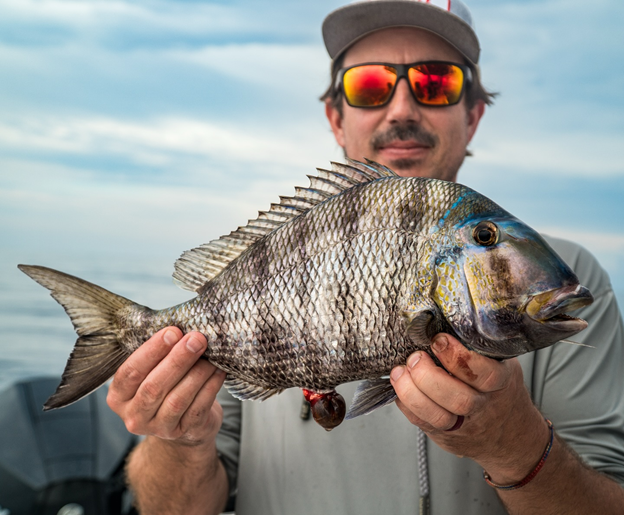
Many of us fish for food. Some of us fish solely for sport and release what we catch. Yet even those of us who fish only for food are bound by season dates, season limits and size limits. Sometimes we catch fish that we’re required to throw back.
Unfortunately, fighting and then landing a fish places immense stress on the animal. Some fish die as a result of improper handling in the wake of being caught; this is called post-catch or bycatch mortality, and it is an unavoidable aspect of our sport.
However, as responsible sportsmen, it is our job to handle fish properly and safely, especially if they are going to be released. This short post will cover some best practices to help mitigate the stresses experienced by a fish so as to reduce bycatch mortality.
Do Not Gill Fish
Probably the most consistent error made among anglers is touching a fish’s gills, which are comparable to the lungs of a human.
The bottom line is this: never touch the gills of any fish that is going to be released. There is no proper way to touch a fish’s gills, and any contact will sharply increase the stress experienced by the fish, making the chances that the fish will die after being released skyrocket.
Be Very Careful When Lipping a Fish
Some fish that lack sharp teeth can be grabbed and raised by the lower jaw in a technique called “lipping.” This is a very popular technique in freshwater with largemouth and smallmouth bass, though it can also be practiced with saltwater species like small grouper, sea bass, sea trout, snook, and any other toothless fish.
However, when you lip a fish, if the fish is small, keep it vertical to minimize stress on the jaws. If the fish is more than a few pounds, use one hand to lip the fish and the other to cradle the weight of the fish under its belly. This is critical not just to minimize the stress on internal organs, but the stress on the fish’s jaw.

Support the Fish’s Weight, No Matter How You Handle It
Regardless of whether you lip a fish or not, you should always fully support the weight of a fish when lifting it out of the water. Failure to do so will place immense stress on the fish’s internal organs and perhaps on its skeleton, which can result in death after the fish has been released. Always use two hands to fully support the weight of any large fish that you are lifting out of the water.
Don’t Hold Big Fish Vertically
Heavy fish should not be suspended vertically, whether by the head or the tail, it doesn’t matter. Doing so can cause the fish’s organs to shift internally, which will kill it once it has been released. If you are not going to keep the fish, make sure that you have lifted it horizontally and with proper support.
Very large trophies, like tuna, sharks and marlin, should not be removed from the water at all, unless they are being harvested. There is no way to properly support these very large species out of the water. They should either be kept, or the hooks should be removed with the fish still in the water. If the hooks cannot be safely removed and the fish is not going to be harvested, cut the leader as close to the hook or lure as possible.
Use a Fish Gripper

One good way to minimize overall handling of a fish, especially for relatively small fish, is to use a fish gripper.
For one, using a fish gripper will afford a sure, non-slip grip and control over the fish. Also, a fish gripper can be used even with fish that have strong jaws or sharp teeth, where the hands cannot be used.
When using a fish gripper, all other observations however still apply. Make sure to support the fish’s lip and do not torque or twist the fish’s lower jaw.
Never Handle a Fish with a Towel
Some anglers use a towel to handle a fish because they don’t like to get their hands slimy. This is a death sentence for the fish, as a towel will not just strip the fish’s slime coat, but possibly scales from the fish as well.
A fish’s slime coat is the fish’s first line of defense against the environment. It is the fish’s strongest defense against pathogens, fungi, and infections, and one of the most critical elements of a fish’s overall immune system. If you strip the slime from a fish, it will almost certainly die.
Never use a towel; handle a fish, if at all, with wet hands, and gently.
Never Gaff a Fish That You Aren’t Keeping
This should go without saying, but you should never gaff any fish that you are not going to keep. The reasons for this should be obvious.
Get Fish Back in the Water as Quickly as Possible
Lastly, never keep a fish out of water for longer than you could comfortably hold your breath. If possible, don’t remove them from the water at all (unless, of course, you are going to be keeping them).
Follow Us for More Fishing Tips and Suggestions
Hopefully you found these tips and suggestions practical and actionable, and that you will put them into practice the next time you are on the water. Bookmark our blog and follow us on our YouTube channel, JohnnyJigsTV, so you never miss out on news and helpful information like this.